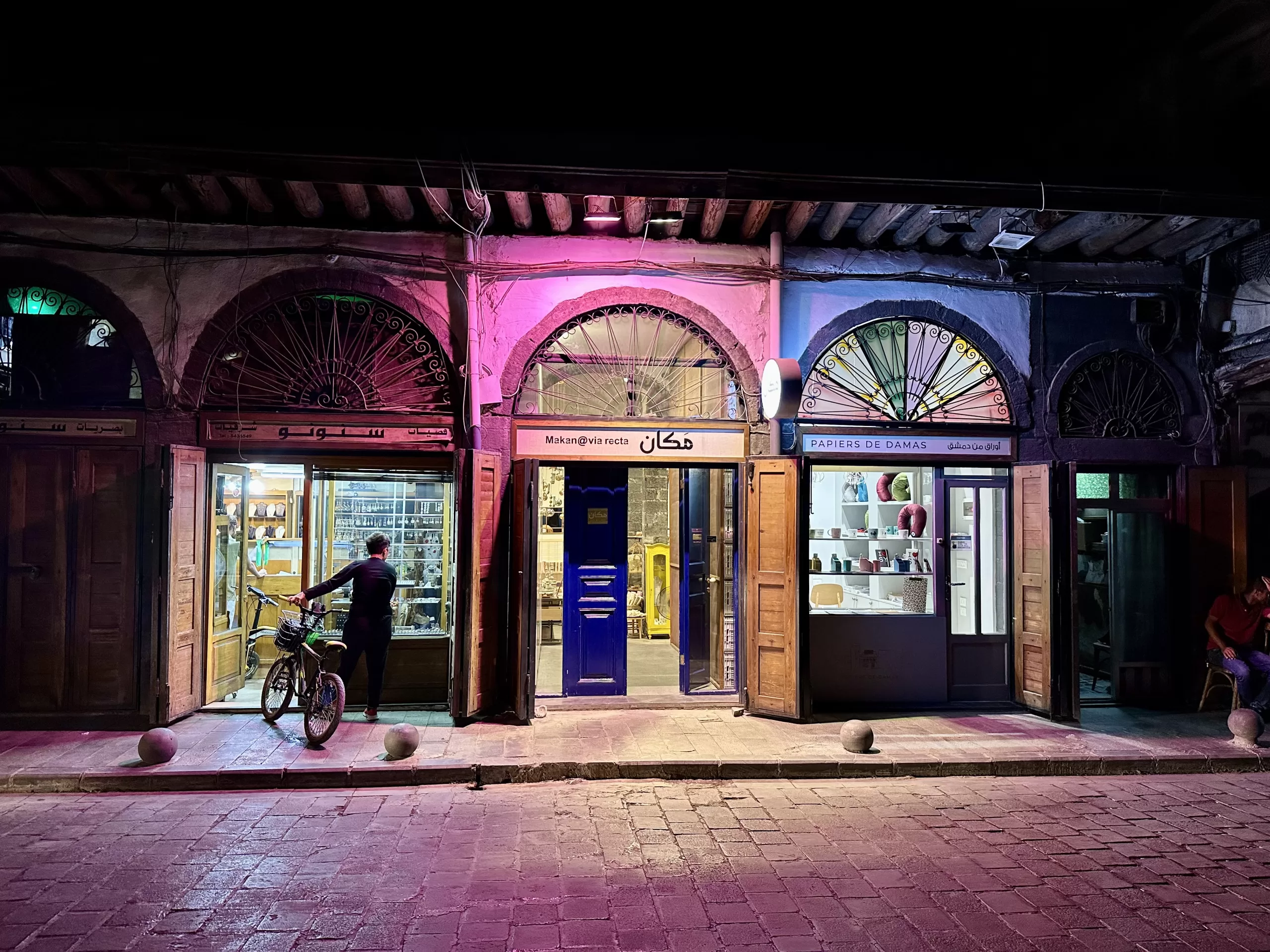
Syria has long been celebrated for its rich heritage of traditional handicrafts—an art form that has been passed down through generations.
From intricate wood inlay (Damascene “Aghabani” and “Arabesque”), handwoven textiles (Old Damascene Clothing, silk production, copper engraving, wood engraving, glass blowing, stained glass, mosaic, oriental rugs, wooden and straw chairs, chandeliers and lanterns, and silver jewelry crafting, Syria’s artisans continue to create masterpieces that reflect centuries of cultural identity.
In the heart of Old Damascus, its historic souqs remain living workshops where visitors can witness this craftsmanship come to life.
Syria Scope Travel invites you to explore the historic handicraft markets of Damascus, offering you a chance to experience traditions up close. It’s the perfect way to immerse yourself in the rich culture of this incredible city.
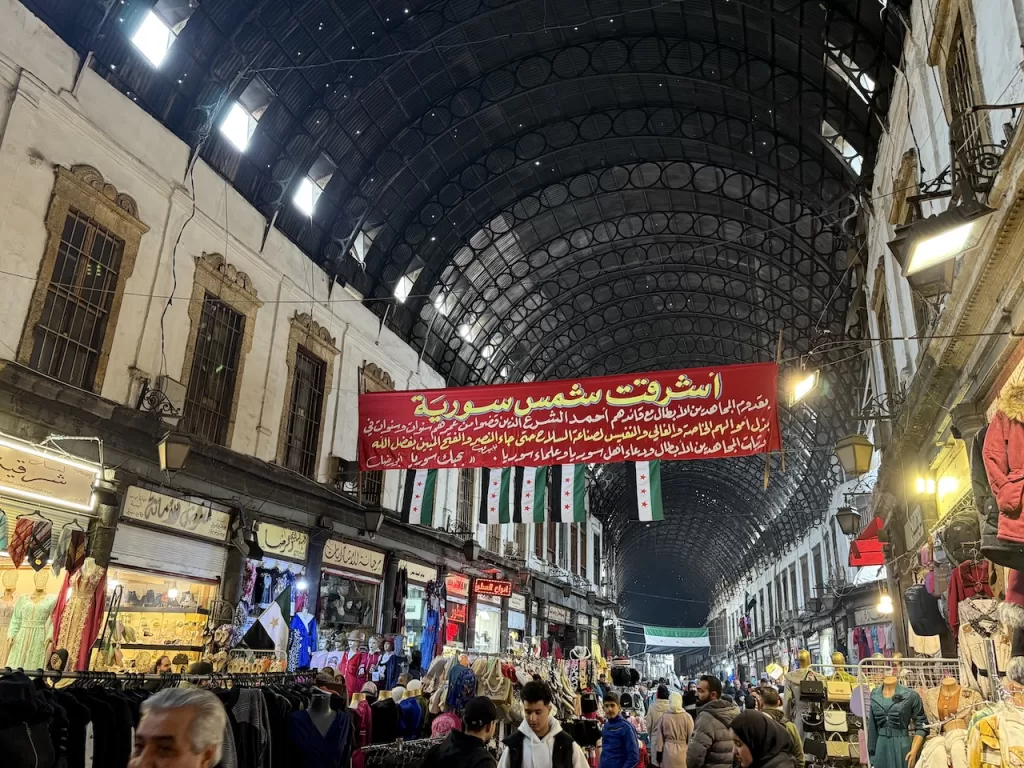
Souq Al-Hamidiya – Metalwork, Textiles and Handicrafts
The most iconic souq in Damascus, Al-Hamidiya, has long been a hub for copper engraving, Damascene swords, handmade garments, leatherwork, and locally woven fabrics—a vibrant showcase of Syrian artisan skills.
Souq Al-Buzouriya – Spice Blending and Culinary Crafts
This Mamluk-era market is a heaven of traditional Syrian craftsmanship.
It is more than a food market; Al-Buzouriya reflects traditional spice blending, herbal preparation, and artisanal confectionery, all part of Syria’s culinary craft heritage.
Souq Al-Asrouniya – Household Handcrafts
Named after the Ayyubid-era school, this souq has long sold handmade household goods, including copper utensils, woven baskets, and simple artisan tools—everyday crafts rooted in Damascus’s domestic traditions.
Souq Al-Muskiya – Bookbinding and Paper Goods
While not a craft market in the classic sense, it still carries the spirit of traditional bookbinding, paper crafts, and calligraphy supplies. Souq Al-Muskiya, near the western gate of the Umayyad Mosque, dates back to the Mamluk Period. Many shops still preserve traditional techniques in printing and book restoration, reflecting a unique type of craftsmanship.
Souq Al-Sagha – Gold and Silver Handcrafted Jewellery
A historic market from the Ayyubid Period, Souq Al-Sagha is a bright showcase of Syria’s long tradition of jewellery craftsmanship. Here, artisans create detailed pieces in gold and silver using techniques passed down for generations. It’s a must-visit spot for those interested in handmade jewellery.
Souq Al-Harir – Silk and Fine Oriental Fabrics
One of the oldest souqs in Damascus (dating to the Roman era), Souq Al-Harir gained fame for its silk weaving and luxurious textiles. Al Harir, meaning Silk in Arabic. Though modernized over time, the market still carries exquisite fabrics and materials that reflect Damascus’s heritage in weaving and textile design.
Souq Al-Khayateen – Tailoring Craft
Known as the “Tailors’ Market,” this Mamluk-era souq once gathered the city’s most talented tailors. It was famous for garment making, hand stitching, and traditional clothing production. The market still preserves its textile identity with numerous fabric and tailoring shops.
Souq Al-Zeraa – Tailoring and Textile Measuring Traditions
Named after the old unit of measurement (arm’s length), “Zeraa,” this Mamluk-period market preserves the world of tailoring, fabric cutting, and garment craftsmanship, reflecting Damascus’s deep textile heritage.
Souq Hammam Al-Qishani – Bridal Crafts and Embroidery
Originally an Ottoman-era bathhouse decorated with beautiful Qishani tiles, this public bath was constructed during the reign of the Ottoman governor Darwish Pasha in the second half of the 16th century. It was given its name in reference to its beautiful Qishani ceramic wall tiles. At the beginning of the 20th century, Hammam Al-Qishani was converted into a market that specializes today in selling wedding dresses, lacework, handmade bridal accessories, and traditional embroidery—a craft Syrian women have mastered for centuries.
Souq Al-Qabaqbiya
Dating back to the Mamluk period, and was named after the craftsmen who made Qibqab (folklore Damascene wooden clogs).
This market was historically the center for this craft, and though the demand for Qibqab has decreased, it remains a noteworthy attraction
Today, Souq Al-Qabaqbiya specialises in selling oriental handicrafts beside the Qibqab.
Souq Al-Arwam
Souq Al-Arwam is named after the Byzantine traders who used to travel from Asia Minor to trade in it.
The main products sold in this market today are apparel, furniture, and old carpets.
Souq Al-Souf
Arabic for the wool market, this souq dates back to the Mamluk era. Although the market does not host wool shops anymore, Souq Al-Souf still bears its original name. Today, they still offer apparel and fabrics that echo their artisanal origins.
Exploring Damascus’s handicraft markets means watching artisans at work, discovering handmade treasures, and experiencing a culture where tradition isn’t preserved in museums—but in the hands of the people.
Why These Markets Matter?
Exploring these traditional markets isn’t simply about shopping—it is a cultural experience. Visitors witness the living heritage of Syria:
1. Woodworkers carving intricate patterns by hand.
2. Tailors preserving centuries-old stitching methods.
3. Goldsmiths shaping jewellery in tiny workshops.
4. Textile artisans keep the art of weaving alive.
Every market reveals a different chapter of Damascus’s story, where craftsmanship is not a product but a legacy.
Discover Syria with Syria Scope Travel in a whole new way.
Don’t wait any longer; schedule your trip to Syria today!
For more information about Syria, please get in touch with us today! Alternatively, check out our extensive range of group Syria tours.
| Share This Post!




| NEWSLETTER
Sign up and get the latest travel news monthly.