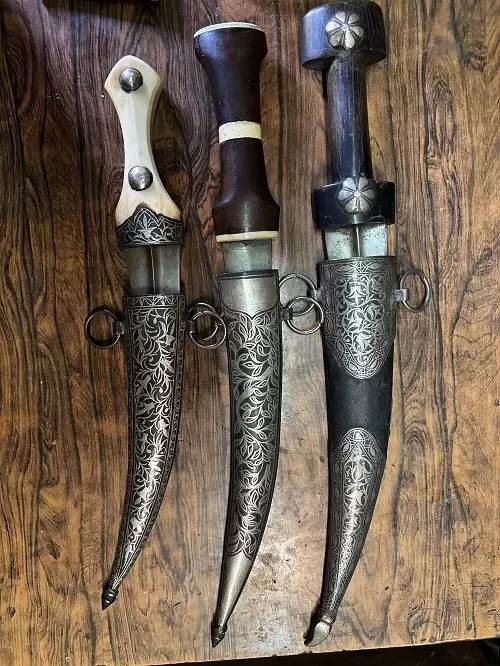
Damascus Steel, also known as damasked steel, has its roots in the medieval city of Damascus, Syria. The name comes from Damascus, the capital of Syria and one of the largest cities in the ancient Levant.
People highly prize it for its sharpness, durability, and distinctive wavy patterns.
During the medieval period, craftsmen valued it for making swords and blades in the Near East. However, over time, the technique to produce true Damascus steel was lost.
Where Damascus Steel Gets Its Name
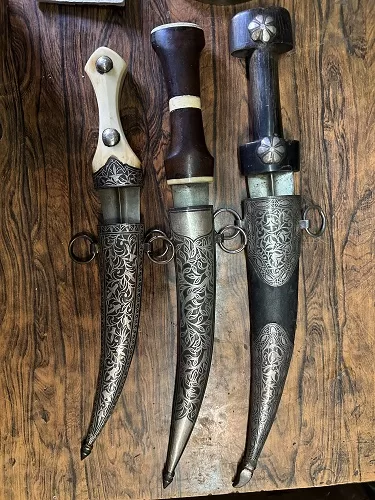
The term “Damascus steel” refers to the city of Damascus, where traders and manufacturers created these blades.
The steel features a wavy pattern, so it is also called Persian watered steel.
This famed type of steel exhibits the watery or wavy light and dark pattern of the metal. Aside from its beauty, craftsmen value it for its ability to maintain a keen edge while remaining hard and flexible.
Origins and Historical Significance
The story of Damascus Steel begins in the early centuries of the first millennium, during the height of the Islamic Golden Age. Artisans most famously used steel to create blades, swords, knives, and daggers.
Craftsmen cast Damascus steel from Wootz, a type of steel originally made in India over two thousand years ago.
In the 1700s, people lost the techniques for making wootz, which resulted in the loss of the source material for Damascus steel.
Although researchers have put in considerable effort to replicate cast Damascus steel, no one has successfully produced a similar material.
The exact method of creating the original Damascus steel remains a subject of fascination and research.
Why is the Damascus Steel So Special?
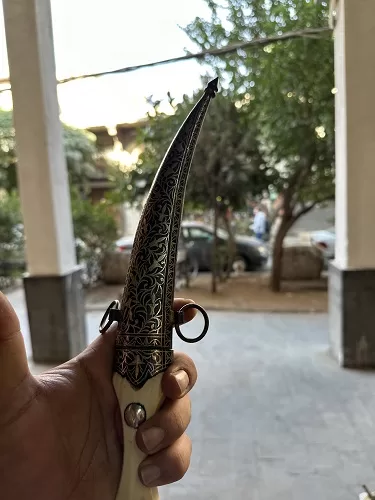
The reputation and history of Damascus Steel have given rise to many legends, such as cutting a hair falling across the blade.
The steel is intrinsically linked to the region’s cultural and historical identity.
It symbolizes the high level of craftsmanship that artisans in ancient Syria exhibited and contributes to the city’s rich heritage.
The steel of Damascus displayed remarkable flexibility and hardness simultaneously.
The Ancient Story
Several theories explain the origin of Damascus steel. Historians trace it back to India and Sri Lanka (300-100 BC), where people referred to it as wootz steel.
Craftsmen gradually brought this highly purified metal and unique process to the Middle East between 900 AD and 1000 AD, where they refined the method. Blacksmiths commonly produced and sold weaponry made from this steel in Damascus, Syria, a successful international trading center of the time.
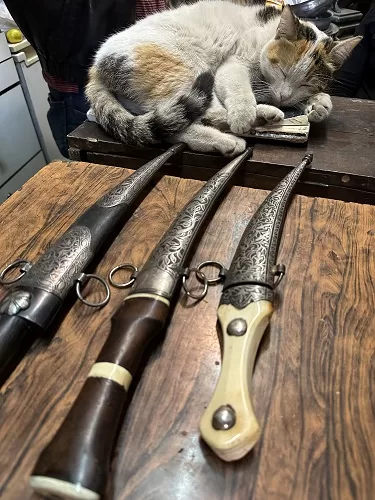
Curious about the cat? read Traveling to Syria as local | Strange things in Syria to be aware of the Syrian life.
Making The Damascus Steel
The extraordinary quality of Damascus steel came from the process that artisans used to create it, a method lost to history.
The process of forging Damascus steel involved complex metallurgical techniques that were highly advanced for their time. Craftsmen forged the steel by combining iron and carbon, introducing the latter in a way that formed distinct patterns in the finished product.
Manufacture involved a secret carburization process in which a form of wrought iron was heated to red heat in contact with various carbonaceous materials in closed vessels.
Then, repeated heating, folding, and hammering of the steel not only created the characteristic patterns but also significantly enhanced the material’s strength and resilience.
The result was an iron-carbon alloy containing as much as 1.8 percent carbon.
The steel was forged using a combination of iron and carbon, with the latter being introduced in such a way that it formed distinct patterns in the finished product.
As the carbon content in steel increases, the hardness and brittleness also rise.
With increased hardness, a tool or weapon can take a sharp edge and maintain that edge through use.
Artisans knew Damascus swords to be extremely hard and flexible to the hilt, able to cleave a free-falling silk scarf or a block of wood with the same ease.
However, the exact technique used to create this perfect balance of hardness and flexibility has been lost over time.
Therefore, making true Damascus steel a thing of legend.
Applications of the Damascus Steel
Weapons made from Damascus steel are vastly superior to weapons formed from iron!
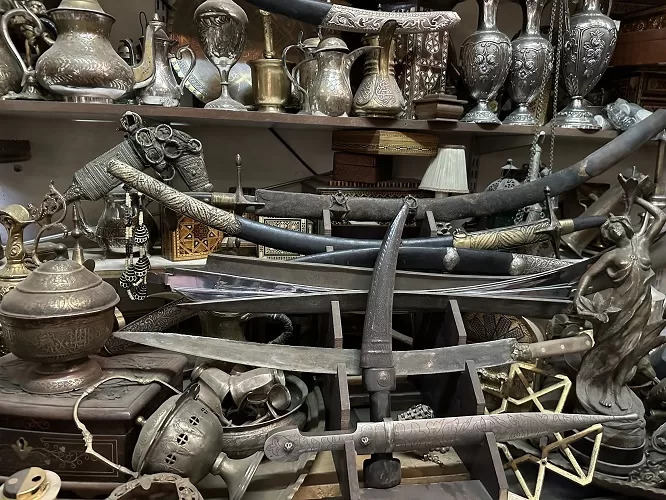
Swords and daggers are the most common examples of these steels, although craftsmen have also created body armor, knives, cookware and utensils, and even jewelry.
The Mystery of the Lost Art
By the 18th century, craftsmen had allowed the knowledge of how to make true steel to fade into obscurity. Various factors, including the depletion of the raw materials used in its production and the loss of specific craft knowledge, passed down through generations, contributed to the disappearance of this metallurgical art. Despite extensive research, modern metallurgists have been unable to fully recreate the original Damascus steel, although they have developed methods to mimic its appearance.
Cultural and Symbolic Legacy
Beyond its practical applications, Damascus steel symbolizes a connection to history, tradition, and the heights of human achievement. It represents a time when artisans pushed the boundaries of science, art, and craftsmanship to their limits, creating objects that were not only useful but also deeply beautiful.
Owning or creating a piece of Damascus steel involves more than just the material itself; it involves preserving a legacy of excellence and mystery. The steel reminds us of the lost knowledge of the past and inspires those who seek to unlock the secrets of ancient techniques.
Want to Explore Syria’s hidden gems? Embark on a journey to Syria.
For more information about Syria please get in touch with us today! Alternatively, check out our extensive range of group Syria tours.
| Share This Post!




| NEWSLETTER
Sign up and get the latest travel news monthly.