Syria does something to your camera roll that you will not be ready for.
You leave with two memory cards and a spare battery, thinking you will fill maybe one of them.
You come home with a folder so full that you and your people spend your first evening back scrolling through it like it is a family album.
Three weeks later, you are still talking about going back. Not because someone told you to. Because the photos keep pulling you there.
Here is what the trip feels like, organized the way memory organizes it: the ancient, the living, and the wild.
The Ancient: ruins, castles, and houses that remember
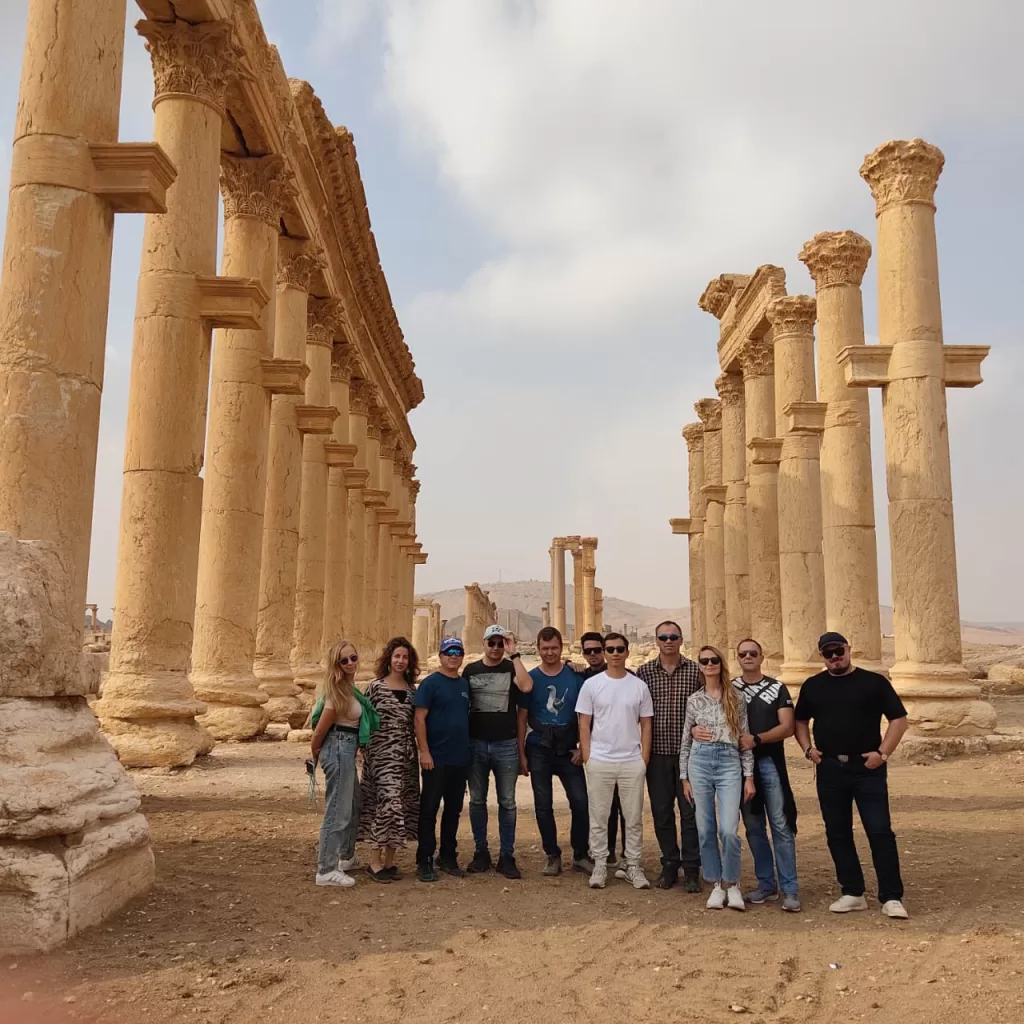
Palmyra
Some places you photograph. Palmyra photographs you.
There is a moment when the desert opens, and the columns appear, all in one breath, and you realize the silence out there is not empty. It is full of everything this place used to be.
The colonnade walks on and on beside you, the theatre sits against the hill as if waiting for an audience, and the light, that soft desert light, leans on the stone until it glows.
You stop thinking about compositions somewhere in the second hour and start feeling the place, which is when the best photos happen anyway.
Come at the golden edges of the day, morning or sunset, and you will understand why people cross oceans for these columns.
Want to see it the same way?
Join us on the Syria Palmyra Tour and bring your camera. We handle the road, the timing, and the best light. You just shoot.
The National Museum in Damascus
You plan one hour here. You spend four.
One thing to know before you go: photography is usually not allowed inside the museum, so check the door and keep the camera ready in your bag. Do not let that disappoint you, because half the experience is outside. The building itself is an old Damascene palace.
Every room is another civilization. You pass fifty photos without noticing until later. Shoot the small things here. The close-ups are where this museum wins.
Read more about The National Museum in Damascus.
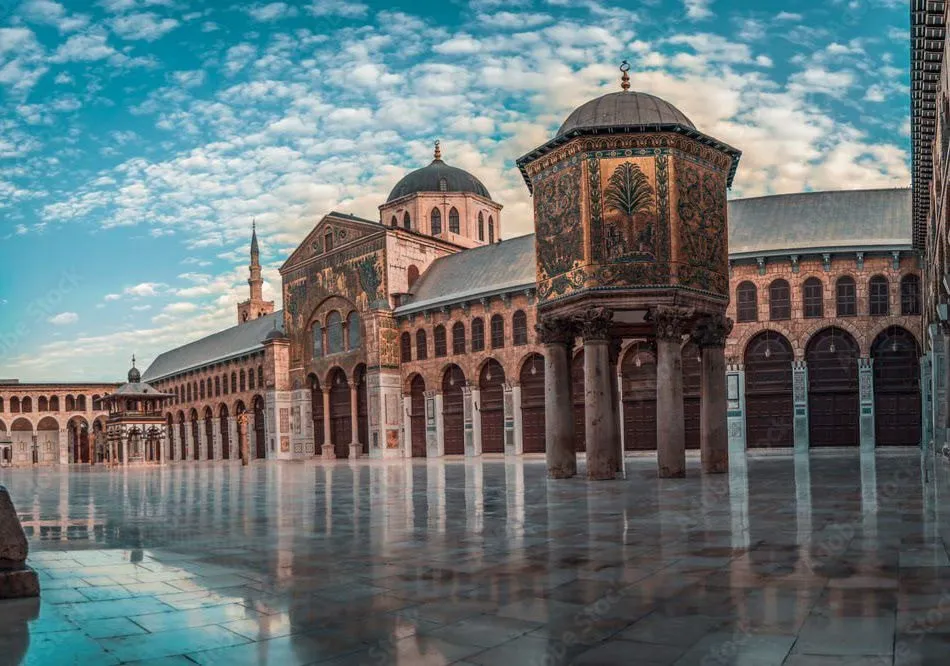
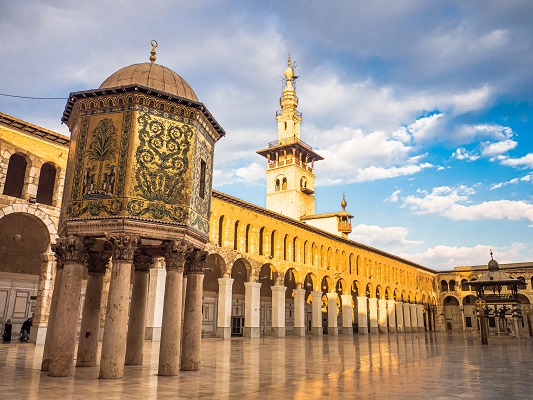
The Umayyad Mosque in Damascus
Start far away. Frame the whole thing: the minaret, the dome, the arcades, the plane trees.
Let your eye take in the full picture before you move closer.
Then walk in and slow down. The courtyard walls are covered in mosaics that sparkle in green and gold.
Inside, rows of marble columns disappear into soft shadow, and the quiet settles over you the moment you step across the threshold. Try to capture that feeling, not just the architecture.
Dress modestly, and take off your shoes.
For more details about the Umayyad Mosque, read here.
Castles and fortresses
Damascus. Aleppo. Al-Husn. Three names, three mountains of stone, and each one owns a different kind of photograph.
The Citadel of Damascus in the old city, and honestly the best shot is not inside it but of it, when evening light hits the walls, and the whole fortress turns the color of honey against a blue sky.
Krak des Chevaliers, the famous Al-Husn, rises over a green valley with walls inside walls, and standing in its corridor makes you understand why it was considered unbeatable for centuries.
And then there are the quiet ones, the castles you rarely hear mentioned, like Shmemis above the Orontes valley, half ruin and half view, where you can shoot for an hour and meet nobody but the wind.
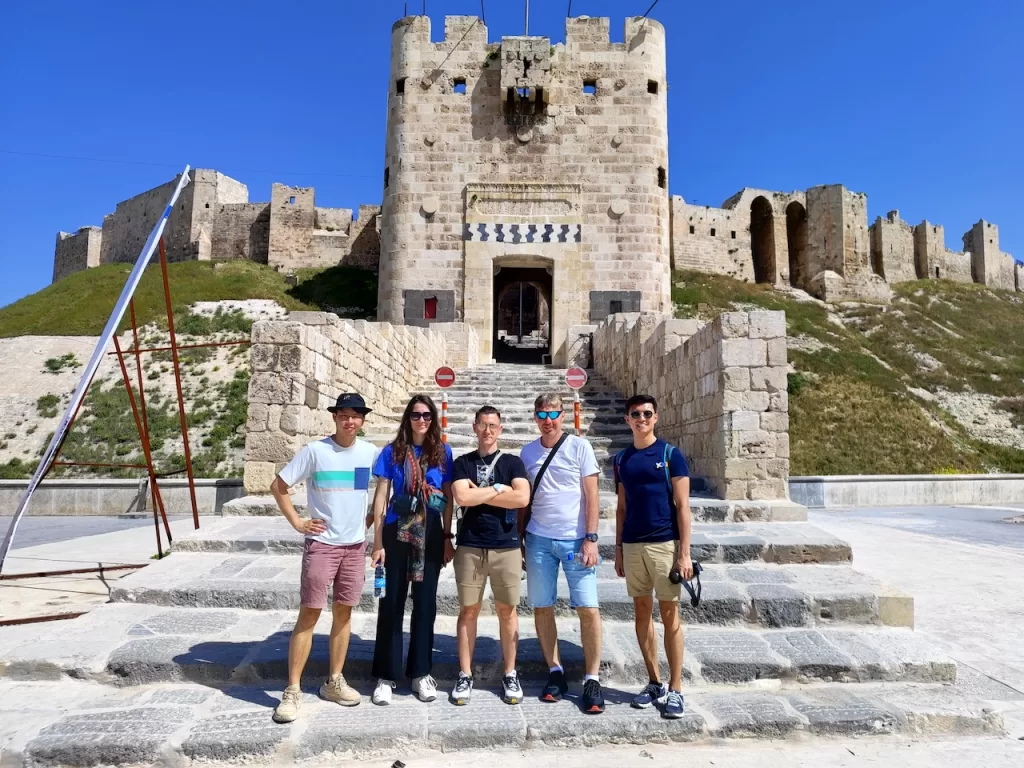
The Citadel of Aleppo
This will be the photo everyone asks about. The climb alone is worth the memory card: a steep bridge wedged between two towers, and the higher you go, the more the city falls away behind you. The gate itself demands attention: intertwined snakes carved over the iron door, and bands of Arabic calligraphy running across the ancient stone. If you take only one wide shot there, take it from the bottom of the slope at golden hour. The whole fortress turns amber, and you will forget to check your settings.
Beit Al-Mu’allim Farhi
In old Damascus, the houses photograph like palaces, and Beit Al-Mu’allim Farhi is the one no photographer should miss.
Step through the plain outer door and the street disappears. You are standing in a courtyard of stone and citrus trees, under a ceiling of carved wood painted deep red, with stained glass throwing colored light across the walls. Every corner is a frame: the arches, the inlay work, the fountain in the middle. And here is the detail that makes you lower your camera and wonder: this old house had central heating. The water in the courtyard basin, the bahira, was warmed and circulated through the house, a centuries-old answer to Damascus winters hiding right under your feet.
That basin will probably be your first photo here, and honestly, it should be. Shoot the house slowly, wide shots for the courtyard, close-ups for the glass and wood, and you will walk away with the most elegant set of interior photos of the whole trip.
The Living: markets and food
Souk therapy
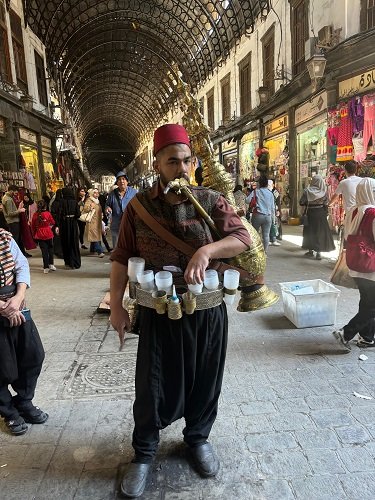
In the Hamidiyeh Souk in Damascus, you will meet a man you will still think about later. He pours arq sous and tamarind juice from a big glass urn, wearing full traditional dress, and when he sees you fumbling with your lens cap, he laughs and straightens his outfit for you like you’re doing him a favor. He is right, too.
Every photo of his stall is free advertising, and he knows it.
Shoot the pour, the syrup hitting the ice, the condensation on the glass. These drinks are a Ramadan staple in almost every Syrian home, and here he is, selling the taste of the holy month in the middle of a normal Tuesday. That is the kind of photo street photography exists for. No awkward moments, just a person who loves what he makes and a camera that loves him back.
Food you photograph before you eat
In Syria, dinner takes twice as long because you keep putting the camera down and picking it back up.
The cheese place stacks (halawet el jibn) into an actual pyramid, each roll glistening with syrup and pistachio. Nabulsi cheese arrives still steaming. The shawarma comes off the spit in ribbons, fattoush arrives in a bowl the size of a hubcap, and mezze comes in waves until you lose track of what is food and what is table decoration.
The advice, learned the hard way by everyone before you: shoot by a window, top-down for the spread, low angle for anything crispy, and photograph first, because Syrian food does not wait politely.
The Wild: mountains and sea
Damascus, from above
Take the drive up Mount Qasioun just before sunset, and the whole city will open up under you. Damascus spreads out below almost completely, and the light goes gold, then orange, then a pink that disappears before you can look away.
At night, go back with a tripod and the city turns into a sea of lights. If your trip falls in winter, stay for the snow.
The white peaks against the blue sky look unreal, and nobody who sees those photos will believe they are Syria.
The coast nobody expects
Nobody tells you Syria has a coast like this.
Green hills falling into blue water, fishing boats stacked in tiny harbors, cliffs near Jableh and Tartus with water so clear the boats look suspended. The morning fog lifting off the sea in the first hour after sunrise gives you the three softest photos of the whole trip.
Quick tips for shooting in Syria
Dust is common at ruins, so keep a microfiber cloth in your pocket. Try to say May I take a photo? ” before shooting, and carry a small notebook for names and stories.
Ask before photographing people, avoid pointing your lens at military areas, and follow the rules at religious sites. Back up your photos every night. A week of images from Syria is a treasure, and you do not want to lose it.
Are you ready to explore the heart of the Middle East? Start planning your trip today and discover why Syria is calling to adventurous souls once again.
For more information about Syria, please get in touch with us today! Alternatively, check out our extensive range of group Syria tours.
| Share This Post!




| NEWSLETTER
Sign up and get the latest travel news monthly.