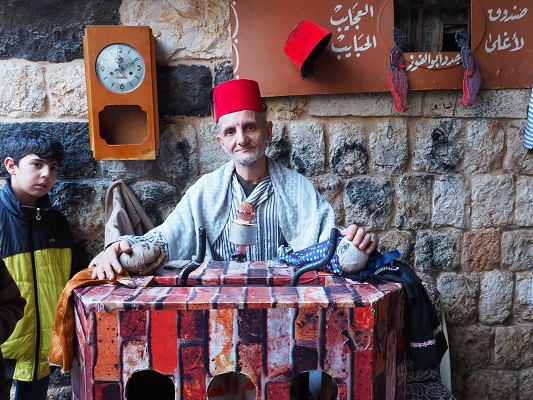
Syria, a country rich in history and tradition, reflects its cultural diversity through the way its people dress.
Understanding the local dress code is essential for anyone who wants to visit or live in Syria, to engage with the culture and respect the local customs.
Like many Middle Eastern countries, a combination of religious, cultural, and historical influences shapes Syria’s dress code, resulting in a unique blend of tradition and modernity.
Whether you’re visiting bustling cities like Damascus and Aleppo or rural areas, knowing what to wear will help you blend in, and show respect to locals, afterward, ensure that you feel comfortable during your stay.
This is the purpose of this article.
Book your tour to Syria here.
Historical and Cultural Context of Syrian Dress
Syria’s dress code is deeply rooted in its rich culture, which dates back thousands of years.
The country has absorbed influences from various civilizations, including Roman, Byzantine, Islamic, and Ottoman cultures.
Traditional Syrian clothing reflects this cultural mixture, often combining elements from these diverse historical periods.
Dress Code for Tourists and Visitors
For visitors to Syria, understanding and adhering to the local dress code is crucial for showing respect and ensuring a positive experience. While the dress code is generally more relaxed for tourists, especially in larger cities, it is still important to dress modestly, particularly when visiting religious sites or rural areas.
What to Wear as a Male Tourist?
For men, wearing trousers and short or long-sleeved shirts is acceptable.
In the warmer months, lightweight, breathable fabrics like cotton are ideal.
Although shorts are common in some Western countries, they are less commonly worn in Syria, especially, the very short ones.
To avoid unwanted attention, it’s best to stick to trousers.
What to Wear as a Female Tourist?
For women, modesty is the key consideration. Women should aim to cover their shoulders, chest, and knees, with loose-fitting clothing being preferable.
Although non-Muslim women don’t have to wear a hijab in public, it is a good idea to carry a scarf when visiting religious sites where covering the hair is a good idea.
Long skirts, trousers, and loose blouses or tunics are suitable for female visitors. In the cities, you may notice women wearing more modern, Western-style clothing, but it is still best to stay on the side of caution and option for more conservative attire.
The Influence of Religion on Dress
Religion plays a significant role in shaping the dress code in Syria.
With a majority Muslim population, Islamic principles often guide the way people dress, particularly in terms of modesty.
However, it is important to note that Syria is also home to Christian, Druze, and other religious communities, each of which may have its own way of dressing.
Dress Code Etiquette at Religious Sites
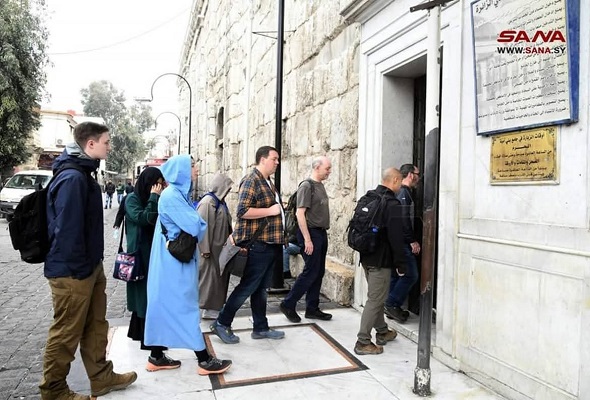
When visiting religious sites in Syria, such as mosques or churches, it is essential to observe proper dress code etiquette out of respect for local customs.
Both men and women are expected to dress modestly, with clothing that covers the arms and legs.
Women visiting mosques are often required to cover their hair with a scarf.
While men should avoid wearing shorts or sleeveless tops.
Loose-fitting clothes are preferred, and shoes must be removed before entering prayer areas in mosques.
By adhering to these guidelines, visitors show respect for the spiritual significance of these sacred spaces.
Modesty for Both Genders
In Islam, modesty is a key principle in how both men and women are expected to dress.
For men, this generally means wearing clothing that covers the body from the navel to the knee.
In practice, many Syrian men wear trousers and shirts with sleeves, avoiding overly revealing clothing.
Furthermore, modern or Western-style clothing such as trousers and button-down shirts is also common.
Women, often wear clothing that covers the body, including the hair.
The hijab (headscarf) is widely worn by many Syrian women, though the extent of coverage may vary. Some women choose to wear a full-length abaya or loose-fitting tunic with trousers.
It is important to note that wearing the hijab is a personal choice, and while many Syrian women choose to wear it, others do not.
you can notice when visiting Syria that some women, particularly in rural areas, continue to wear traditional clothing such as the abaya or the niqab. This blend of modern and traditional styles is one of the unique aspects of Syria’s dress code, reflecting the country’s complex culture.
Practical Tips for Visitors
Our Syria Scope Travel Guide is always ready to help you during your visit and answer all your questions.
- Comfort is important: Syria’s climate can be hot, particularly in the summer, so wearing lightweight and breathable fabrics like cotton is highly recommended.
- Layering is useful: While it can be hot during the day, evenings can be cooler, especially in desert or mountainous areas. Bringing a light jacket is a good idea.
- Respect local customs: Even though tourists are often given more leeway in terms of dress, showing respect by dressing modestly will earn you respect from locals and help you feel more comfortable during your visit.
- Footwear: Comfortable walking shoes are essential, particularly if you plan to explore historical sites or walk through markets. In mosques, you will be required to remove your shoes, so wearing slip-on shoes can make this process easier.
Traditional Syrian Clothing
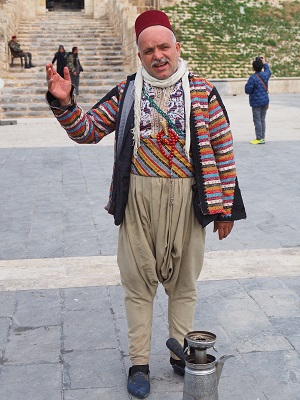
In rural areas and smaller towns, you will often still find people wearing more traditional attire.
For men, this often includes the galabiyya, a long, loose-fitting robe, and a headscarf known as a koffiyeh or shemagh, which protects them from the sun.
In urban areas, men may wear the dishdasha, which is a similarly long, comfortable garment. Women, on the other hand, traditionally wear the abaya or hijab, though the styles may vary depending on region and religious background.
Moreover, in some communities, you may also see women wearing a niqab, which covers the face except for the eyes.
The fabrics used In traditional clothing often reflect the practical needs of the wearer. In the hot desert climate, loose, breathable fabrics like cotton and linen are popular choices.
Meanwhile, in the cooler mountainous areas, heavier materials are used for warmth. The choice of colors, too, can be significant, with lighter shades preferred for reflecting heat in the summer, while darker colors are reserved for more formal occasions or religious purposes.
While these traditional garments are still common, especially in rural areas, modern influences have also shaped the dress code in Syria, particularly in urban centers where Western fashion is becoming more prevalent.
A visit to Syria is more than a journey through history; it’s an invitation to be part of its living culture.
Globalization and its Effect on Syrian Dress
Globalization has significantly influenced Syrian fashion, particularly in urban areas like Damascus and Aleppo.
The influx of Western media, international fashion trends, and global brands has led to a blending of traditional Syrian clothing with modern styles. Younger generations, in particular, have adopted outfits like jeans, T-shirts, and sneakers, while still maintaining cultural values of modesty.
Despite the growing popularity of Western fashion, many Syrians continue to wear traditional garments for special occasions, reflecting a balance between modernity and heritage.
This fusion showcases the evolving nature of Syrian fashion in a globalized world.
Visitors are invited to explore not just the stunning architecture, but also the traditions that have been preserved for centuries, book yours now.
Prepare your bag and come explore this outstanding country, Embark on a journey to Syria
For more information about Syria’s Culture please get in touch with us today! Alternatively, check out our extensive range of group Syria tours.
| Share This Post!




| NEWSLETTER
Sign up and get the latest travel news monthly.