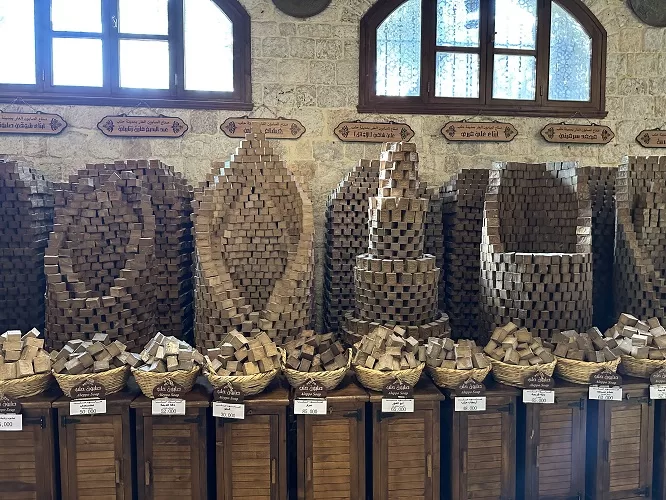
Imagine traveling to Syria and experiencing the famed Aleppo soap firsthand.
Syria Scope Travel Agency is always ready to make your dream possible.
The deep perfume of olive and laurel oil hangs in the air of old Aleppo, home to an ancient soap industry.
In fact, the Aleppo soap is the first hard, original soap to be manufactured in the world.
It is famous for its remarkable qualities and historical background.
The real soap is also known as Aleppo’s green gold, laurel soap, or ghar soap; the Arabic word ghar means laurel.
For over 2,000 years, Aleppo’s soap has been crafted using pure olive and laurel oils.
It ranks among the purest soaps ever made, created exclusively with the most natural ingredients, olive and laurel oil, as mentioned above. Actually, the purity of the Aleppo soap comes from these noble ingredients.
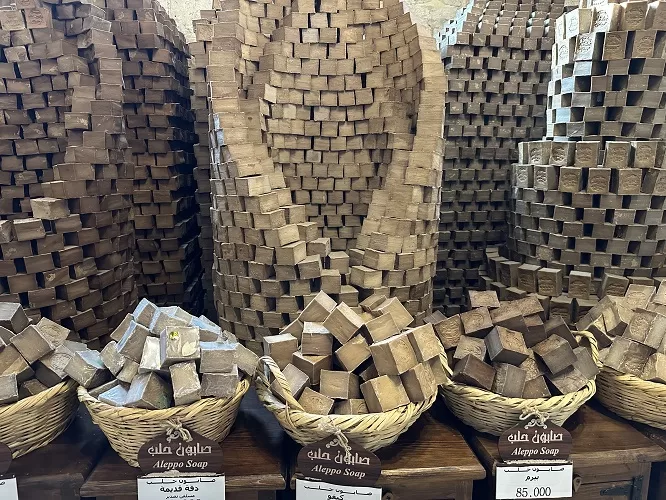
Discover the Original Aleppo Soap
The original Aleppo soap is made by mixing oil from laurel (bay) trees with olive oil and sodium hydroxide to start saponification.
Indeed, Aleppo soap uses no chemicals or other additives, which gives it a good reputation.
In some cases, other natural ingredients such as honey and pure essential oils are added.
Some factories have even developed a line that adds almond oil, mint, and lemon oil to laurel, catering to some European and Asian tastes, with consideration for the product to remain high in quality.
From Natural Ingredients to Iconic Syrian Soap
Factories of Aleppo soap used to buy the laurel oil directly from villages outside Aleppo, but as demand increased, they had to travel further afield to Lattakia on the Mediterranean coast to obtain the quantities that were needed.
Olive groves, however, are plentiful in Aleppo.
In addition, farmers spent November and December collecting olive oil from local trees. Then, production took place.
So, usually, soap manufacturing occurs in the winter months.
Manufacturing Process of Aleppo Soap
Over thousands of years, the town of Aleppo has preserved the ancient processing method, the soap’s main secret.
However, minor alterations to the age-old technique were that the manufacturer heated the soap with a steam-boiler rather than a wood fire and produced a range of herbal soaps adapted for modern market tastes.
The large blocks of soap are made by hand using a traditional method.
These soaps are cut into blocks and stamped with the mark of the manufacturer.
The quantity of both oils used may vary from one soap bar to another.
Usually, olive oil is between 60-98% while laurel is between 2-40%.
The soap that has the most amount of laurel oil in it is considered to be the most valuable.
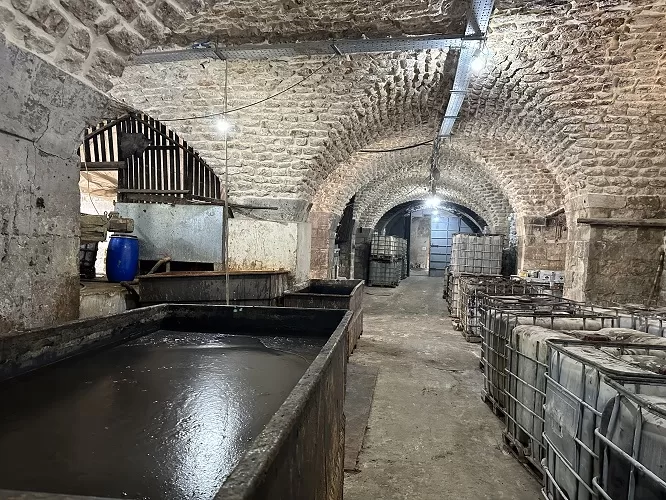
The mixture of olive and laurel oil is then poured onto a flat surface, like a shallow swimming pool, and then cooled.
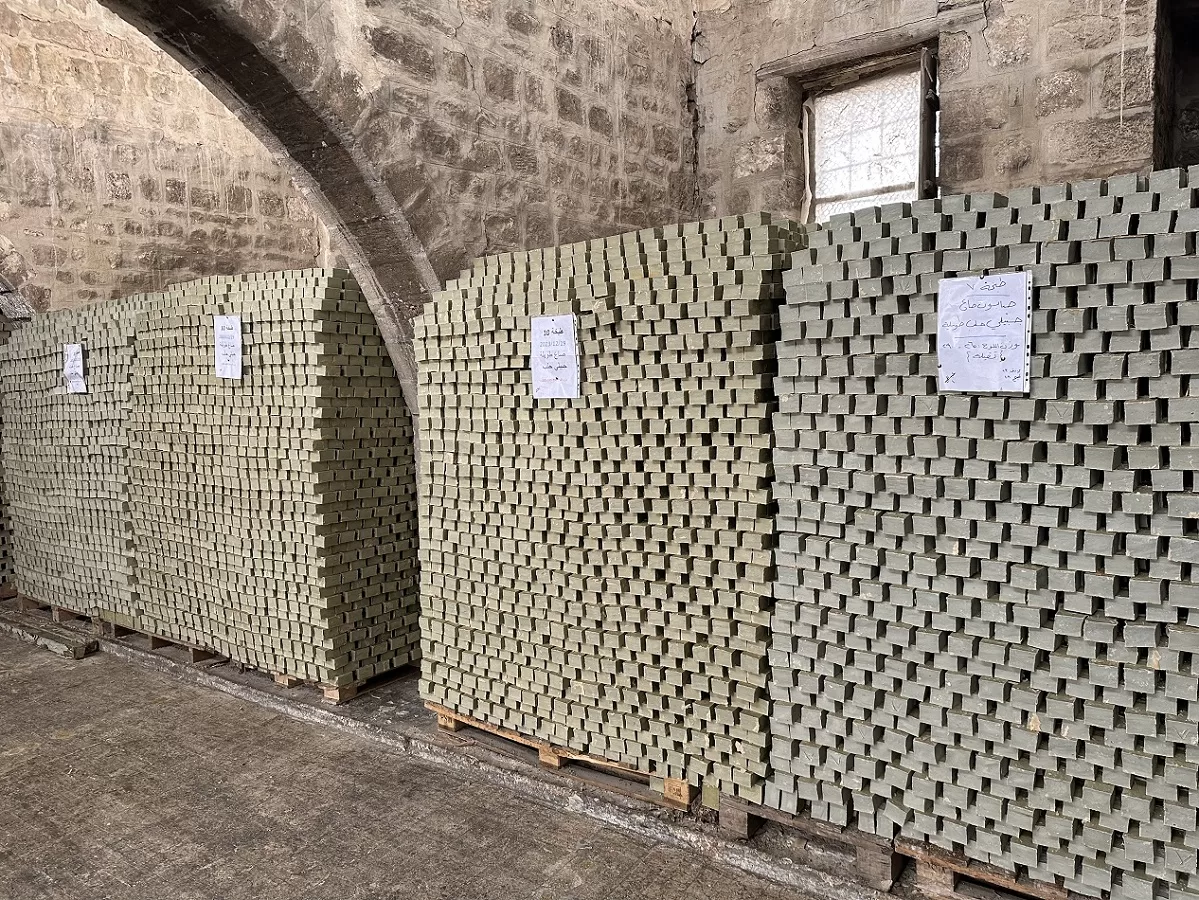
After that, the resulting block is cut by hand and left to dry for about six months to three years to make it last longer.
During this drying process, the soap gets hard, and its color changes from olive green to a beautiful deep gold.
The color of the soap depends mostly on the amount of laurel oil the bar has.
Color ranges from a pale yellow (small concentration of laurel oil) to brown or golden color (large concentration of laurel oil).
An Iconic Syrian Masterpiece: The Weather Effect
Ghar soap is distinguished by its origins and its production due to its ideal climate.
The moderate humidity in Aleppo plays a crucial role in the success of this soap’s production.
Over the years, artisans have attempted to replicate the same recipe and ingredients in other locations, such as coastal areas.
Still, they didn’t achieve the same quality due to the high humidity in those regions. Thus, the unique climate of Aleppo is the secret behind the success of this masterpiece.
What Makes Aleppo Soap So Special?
In fact, the Aleppo soap doesn’t contain any artificial colorings (its color is due to the proportion of laurel oil).
Many imitators use chemical coloring to give the soap a green tint of laurel and olive oil.
No artificial fragrances and flavors, parabens, foam stabilizers, or animal fats.
This makes the soap the ultimate natural product, with extremely good properties for the skin.
Olive oil is a natural moisturizer, and laurel oil is a cleanser, in comparison with modern soaps that use everything from pig fat to crushed horse bone, as well as “less noble” oils, such as palm oil or other seeds.
Also, Aleppo soap is so mild, gentle, moisturizing, and natural that it can be used on adults, babies, small children, and even pets. It will not dry your skin out, and once we,t it has a luxurious, smooth, and creamy feel.
After each use your skin will feel refreshed.
Export Potential
This soap could see a revival post-Assad.
With restored production facilities and open international markets, this iconic product can regain its status as a premium export.
Improved trade relations and marketing efforts could help Aleppo soap reach global consumers more easily, showing Syria’s pride.
Syria’s Ancient Beauty Secret You Must Try: Aleppo Soap
For anyone who finds themselves suffering from skin allergies, irritated skin, or conditions such as general dermatitis like eczema, psoriasis, bacterial dermatitis, try the Aleppo soap, which aids in the recovery of skin diseases.
It’s recommended for all skin types, and it also helps prevent hair loss.
In addition, olive oil is very rich in vitamin E and polyphenol, which is a useful antioxidant that can help delay the effects of aging, while the Laurel oil has antiseptic properties.
So, it softens and nourishes the skin without causing dryness and irritation.
There are no chemical additives, and that is a reliable guarantee from allergies or other harm to the skin if compared to other industrial soaps.
Some Dermatologists advise using Aleppo soap to eliminate the sebum from the skin.
In conclusion, book your tour to Syria now and feel the richness, because each bar tells a story of Syria’s past, its resilience, and its cultural pride.
The Largest Soap Bar in the World
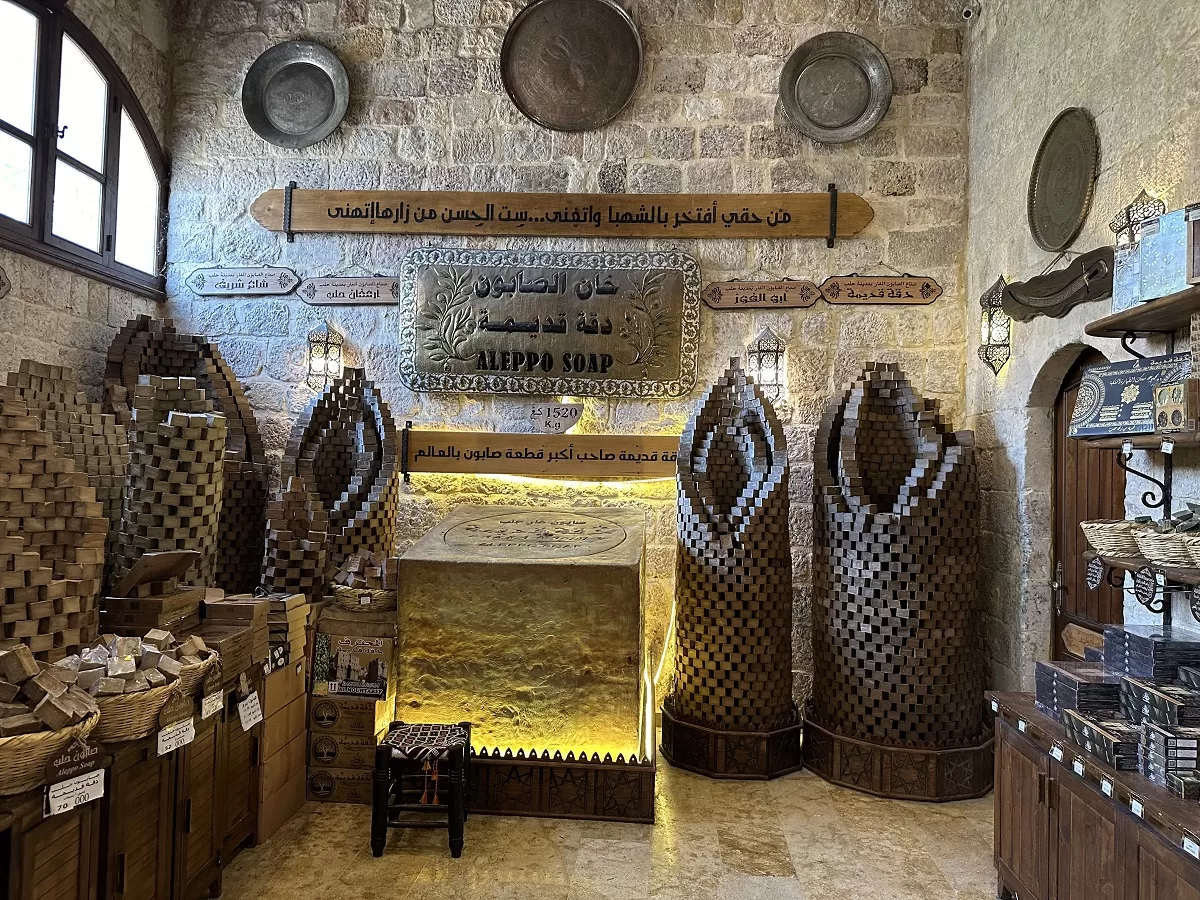
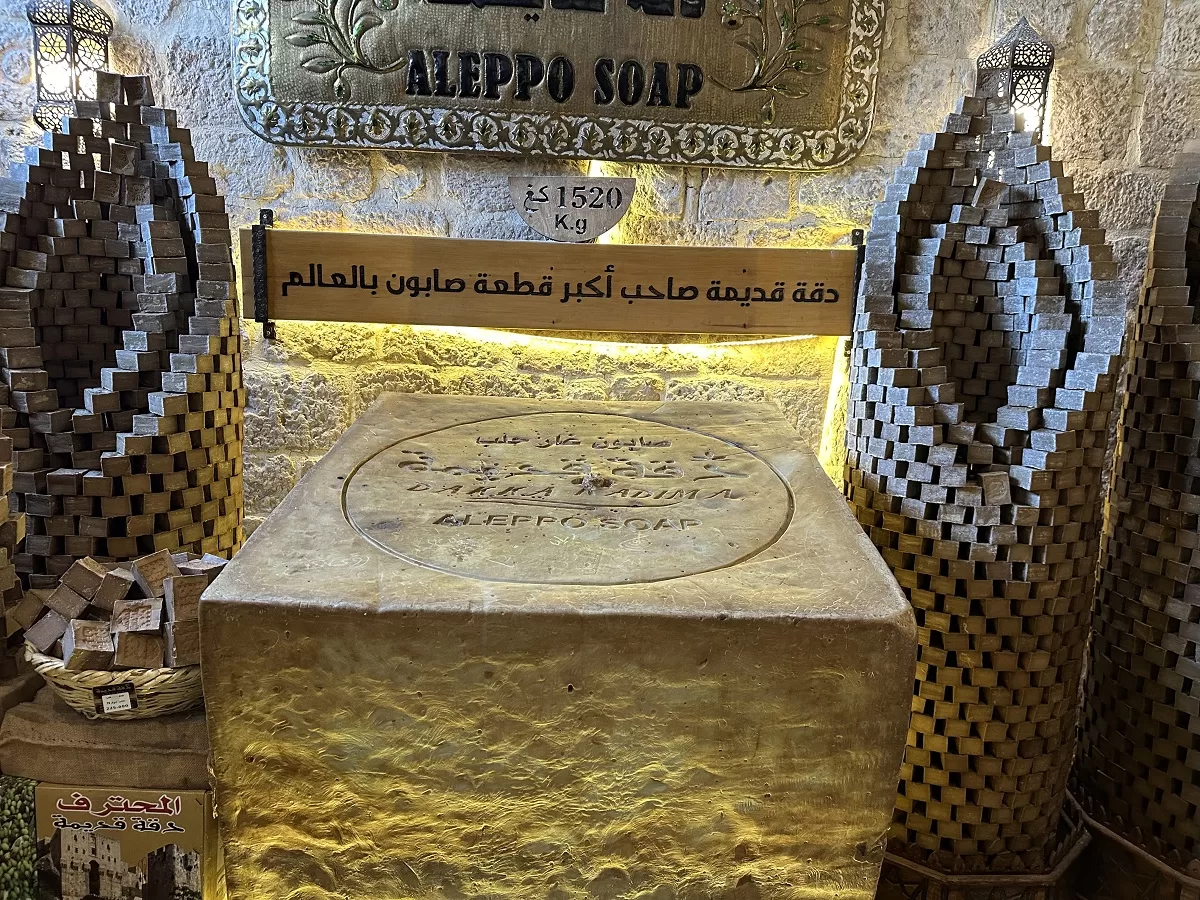
The largest soap bar in the world is located in the heart of Aleppo. This massive bar, weighing over a ton, in precise 1520 Kg, symbolizes Aleppo’s rich history in soap craftsmanship. Created by skilled artisans using the traditional formula of olive oil and laurel oil, the soap reflects the dedication of Syrian soap makers to preserving their craft despite years of hardship.
In fact, the brand name of the biggest bar is Daka Kadima; they have a shop in Aleppo, which you may visit during your stay.
By traveling to Syria, you support the artisans and help preserve an ancient tradition.
The Bathhouse Ritual: Aleppo Soap’s Role in Syrian Culture
In Syria, every traditional public bathhouse, or “hammam al-souq,” uses Aleppo soap as a part of the bathing ritual. This unique soap occupies a special place in Syrian culture, serving not just as a cleaning product but as a symbol of heritage and self-care.
The hammam experience is not complete without the rich, creamy lather of Aleppo soap.
Visit an authentic Syrian bathhouse, where Aleppo soap is a fundamental part of the ritual, used in hammams for its soothing properties. Indeed, Aleppo soap is more than a beauty product; it’s an experience of Syrian hospitality and culture.
How the Previous Conflict Impacted Aleppo’s Soap Industry
The intense fighting made it too dangerous to continue in the same rhythm in making soap for several reasons:
First and most importantly, the safety of the employees was threatened.
Then the unpassable roads make it difficult to receive or send the goods.
Thirdly, the unavailability of the ingredients due to the destruction of a lot of land, especially olive trees.
Finally, roadblocks and shootings prevented making deliveries to shops in Damascus.
However, Syria’s industry will be enhanced soon.
Syria’s Journey to Restore Aleppo Soap Making
Despite the severe impacts of previous conflicts, Syrian soap makers have shown resilience in their efforts to keep this centuries-old tradition alive. Aleppo, known as the birthplace of soap, saw its historic soap factories devastated by war. Yet, Syrian artisans have worked tirelessly to rebuild and re-establish production facilities, determined to revive this iconic craft.
With Syrian artisans dedicated to reviving this iconic craft, you’ll witness the spirit of resilience and culture firsthand.
Furthermore, with each bar they make, they are reclaiming a cherished cultural practice, ensuring that future generations will continue to experience the renowned quality of Aleppo soap.
Unique Gift from Syria
Walking through the bustling souks, you’ll find Aleppo soap in every shape and shade, inviting you to experience Syria’s heritage.
You are lucky to have tried that famous soap bar, so share this special product with your loved ones.
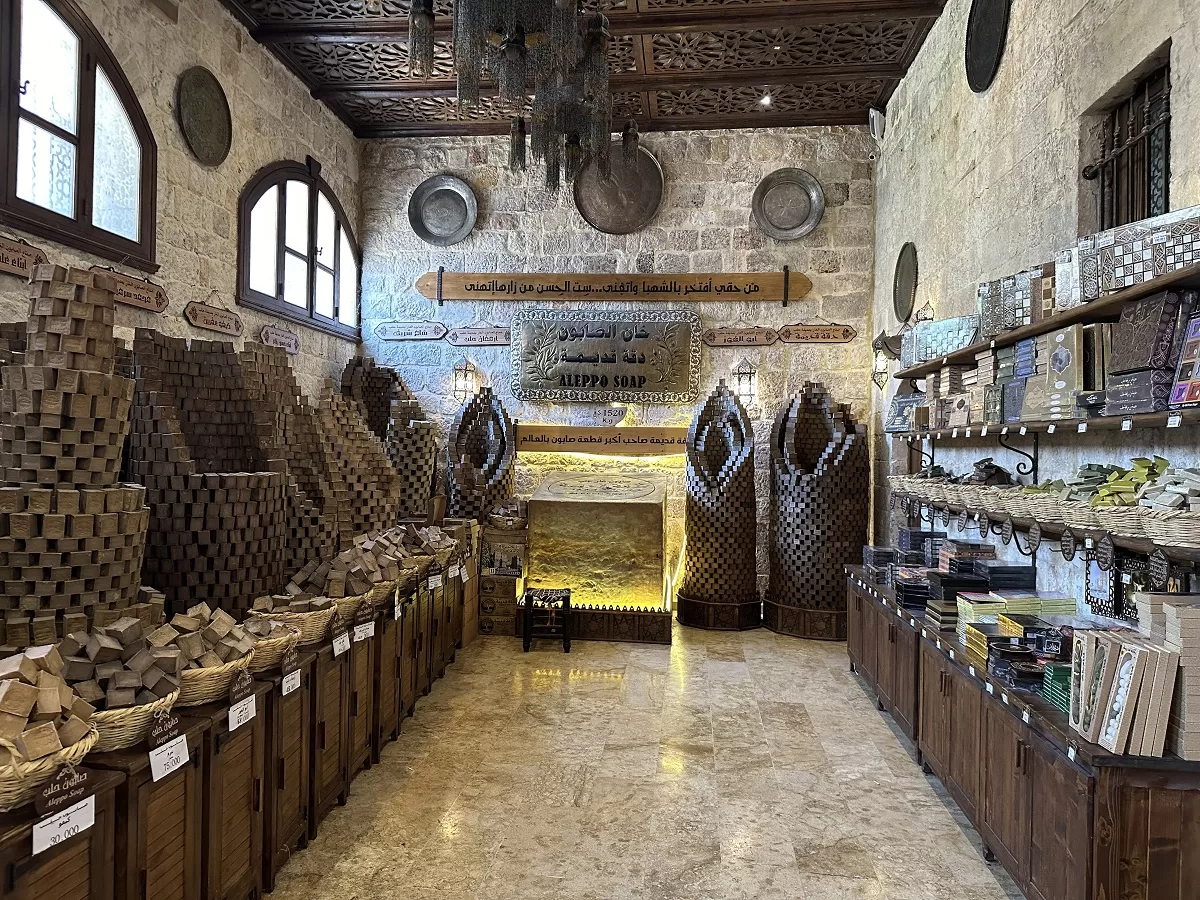
This soap makes a unique gift for loved ones, as it carries a blend of tradition, and natural goodness.
Handmade from pure olive and laurel oils, each bar tells the story of Syrian craftsmanship and offers benefits for all skin types, making it a practical present.
Gifting Aleppo soap is like sharing a piece of Syria’s heritage; it’s a token of a culture that values natural beauty and purity. With its distinctive earthy fragrance, Aleppo soap offers a sensory experience that connects the recipient to the land and culture of Syria.
Want to Explore Syria? Embark on a journey to Syria.
For more information about Syria, please get in touch with us today! Alternatively, check out our extensive range of group Syria tours.
| Share This Post!




| NEWSLETTER
Sign up and get the latest travel news monthly.