Damascus, one of the world’s oldest continuously inhabited cities, is famous for its rich history, vibrant culture, and stunning sites that attract almost everyone.
Within its ancient walls are numerous traditional houses that offer a glimpse into the city’s past and present.
Damascus houses remain havens of peace, offering their inhabitants a slice of paradise on Earth.
These architectural gems showcase the unique blend of Islamic, Byzantine, and Ottoman influences that have shaped Damascus’s identity.
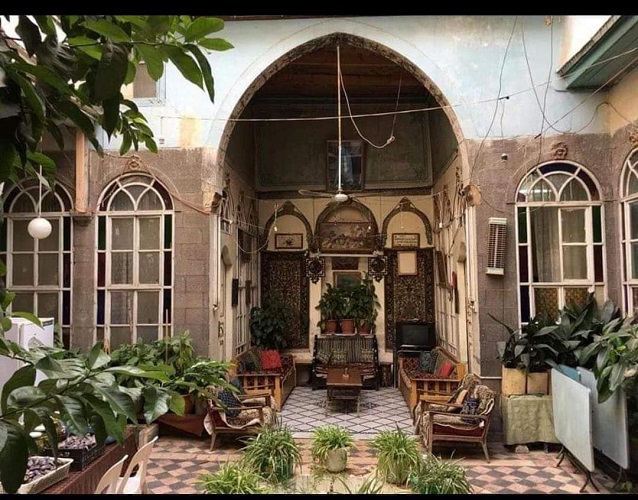
A Brief History of Damascus Houses
Damascus’s architectural heritage dates back to the 1st millennium BC. The early Damascus Houses were typically made of mud bricks.
During the Ottoman period, Damascus witnessed a flourishing of architectural activity. Where the Ottomans built numerous mosques, palaces, and residential buildings, many of which still stand today. These structures often featured large courtyards, ornate facades, and intricate woodcarvings.
The Architectural Details of the Damascue Houses
The external look of a typical Damascene house intentionally presents a very simple exterior, with simple walls and a modest door, however, step inside and you’ll discover a world of intricate design and outstanding decoration.
In fact, the designers chose simplicity for several reasons.
Firstly, they meant to avoid social divisions.
Secondly, it aimed to maintain a uniform and harmonious appearance throughout the neighborhood to achieve equality within the community.
Thirdly, it is important to protect the home from potential thieves who might target wealthy homes.
While the outside might appear modest, the interior was often a testament to the wealth and craftsmanship of the city’s artisans.
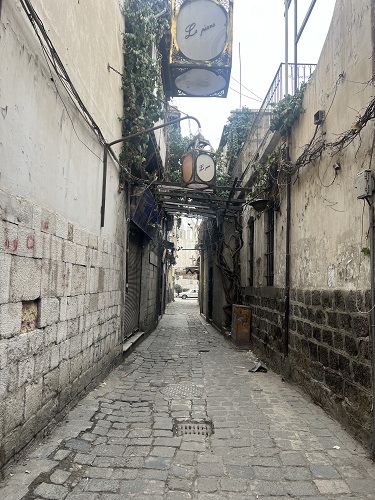
Therefore, the exterior was designed to appear the simplest, while the interior was carefully planned to reveal the true beauty of Damascus Houses.
So, it’s time to open the door now!
The Main Feature of the Damascene House.
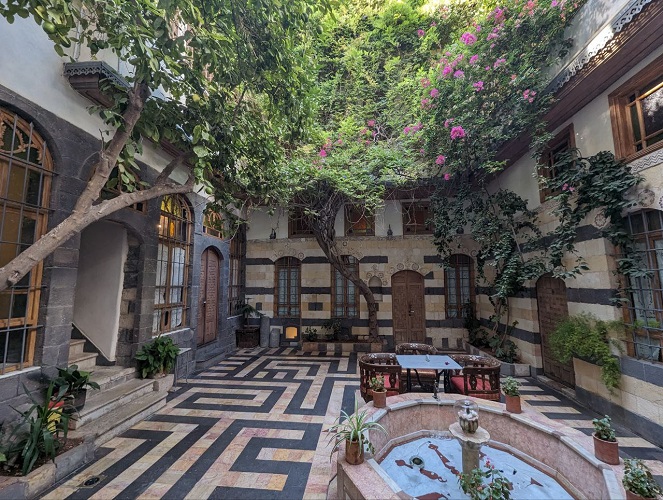
Through Narrow Alleys to a Sunlit Courtyard
A visitor starts their journeys through narrow, winding alleys until they step into the heart of the home.
This long, shadowy entrance hall in a Damascene house is designed for security and comfort.
Its length provides a barrier, allowing the women in the house to go to their private room without being seen, especially if women wear Hijab outside the home.
Second, upon entering from the outside, a person enters a dark space, allowing their eyes to adjust to the change in light and providing a moment of tranquility after the visual stimulation of the outside world.
A Damascene home welcomes visitors into a serene courtyard featuring a fountain (Bahra) in Arabic.
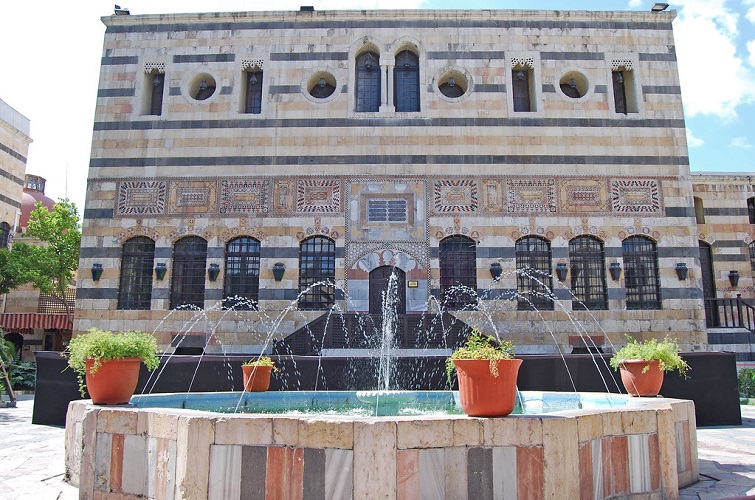
This fountain serves several purposes: it blocks out external noise, provides cooling in the summer months, and its soothing sound creates a tranquil atmosphere, before widespread access to music, encourages relaxation.
Indeed, hospitals in the region employed fountains and musical instruments in their treatment plans for some health conditions because they regarded the calming effect of running water as beneficial.
In fact, the therapeutic use of sound is a relatively recent discovery in Western medicine, that is a testament to the heritage of Syrians.
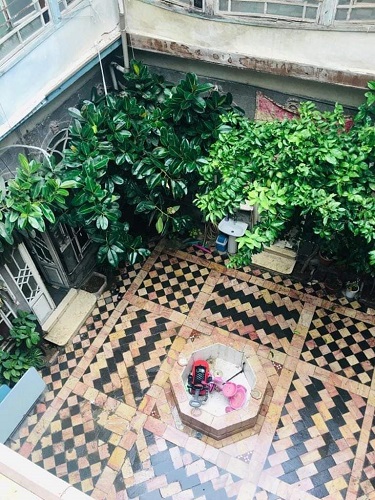
The central courtyard is a defining feature of most Damascene houses. It serves as a gathering place for the family and a source of natural light and ventilation.
Some houses may have a single courtyard, while others might boast two: an outer “Salamlek” for receiving guests, typically men, and an inner “Haramlek” reserved for family and women.
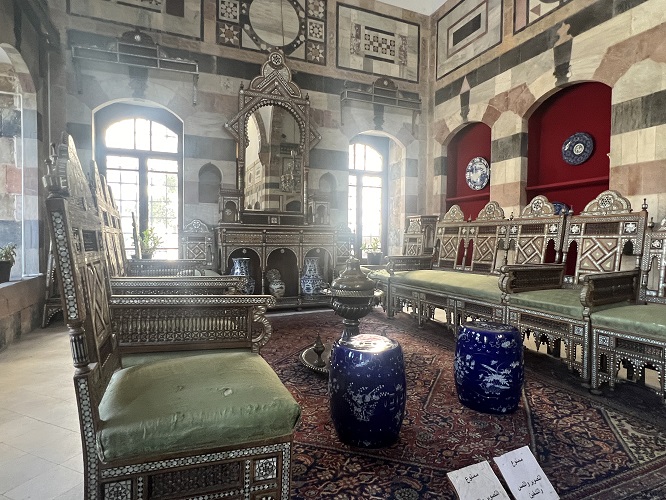
Larger homes could even have three or four courtyards, depending on the owner’s wealth.
In addition, indoor bathrooms were rare; instead, residents used public bathhouses (Hammam al-Souq).

The Iwan: Damascus’s Architectural Gems
An Iwan or Liwan is a room with one open wall facing the courtyard, the iwan in a Damascene house is where families would gather to enjoy the view of the courtyard.
If a house had two iwans, one facing north and the other south, the family would sit on the southern side during hot summer days to seek shade from the sun. In winter, they would sit on the northern side to enjoy the warmth of the sun.
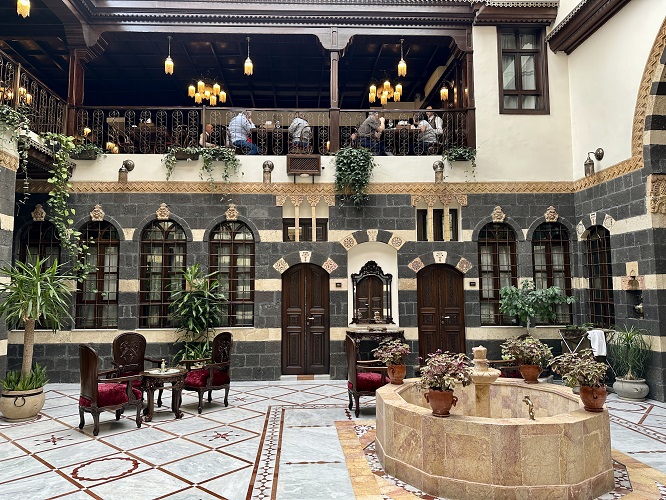
Here, The greatness of the Damascene house is shown, and it fulfills the needs of its inhabitants.
Above each iwan, a wooden ceiling is decorated in the ‘Ajami’ (a style of decoration influenced by foreign cultures).
This decorative style featured beautiful flowers, geometric designs, and poetic inscriptions.
All of these hand-painted decorations typically adhered to Ottoman patterns.
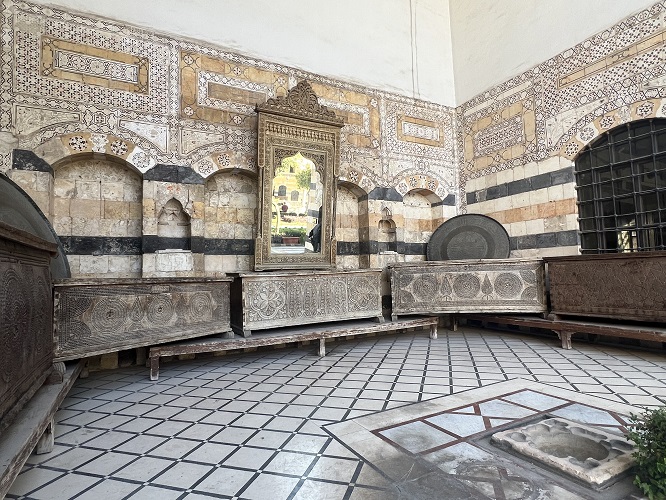
The Interior of a Damascene House
To ensure privacy, Damascene houses had no windows or balconies facing the street. Instead, large windows overlooked the inner courtyard. These windows were often adorned with colored glass fragments, casting beautiful hues of light into the reception rooms.
The guest room (qa’a) was usually the most ornate room in any Damascene house. Used for receiving daytime visitors, it showcased the finest and most detailed features to impress guests. Like most ground-floor rooms, this room had a raised floor covered with carpets. Visitors would remove their shoes upon entering.
In particularly wealthy homes, the guest room might even include a fountain. This served a dual purpose: creating a soothing, cooling atmosphere and keeping conversations private.
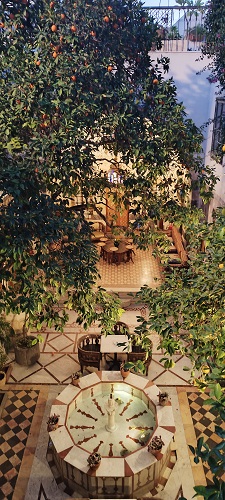
The Garden of a Damascene House
No Damascene home was complete without a garden. A distinctive feature of Damascene’s house design was the central courtyard surrounded by a lush green grapevine that climbed walls, arches, and window frames. The air was filled with the fragrance of various flowers and plants.
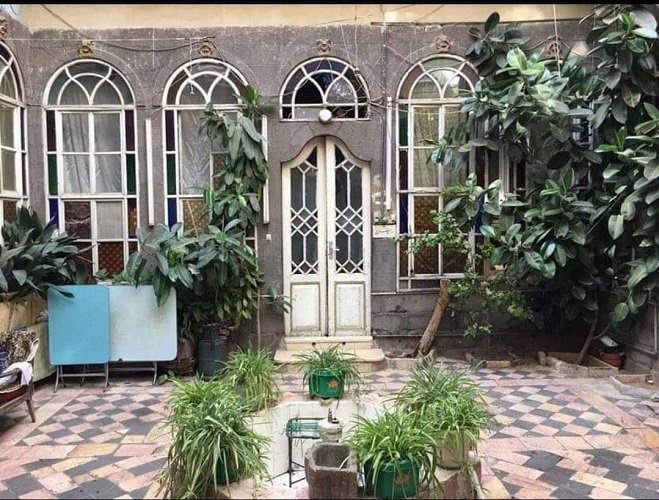
Jasmine was the most prevalent flower in any Damascene home. Its simple yet fragrant blossoms permeated every corner of the house.
In Addition, the bougainvillea, with its vibrant purple-pink flowers and dense green leaves, was also common in the central courtyard. Its delicate petals would scatter across the white marble floors with every gust of wind.
Furthermore, roses are the crown jewel of the garden.
Their beauty and fragrance extended beyond the high walls of the house, revealing the presence of a garden to passersby.
Also, the lemon tree has very high value by the Syrian people, you can see this tree at almost every house, and enjoy the look, the smell, and the therapeutic benefits of this tree.
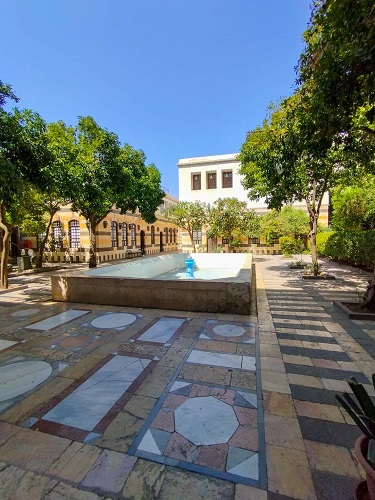
The Exterior of a Damascene House
The exterior of Damascene houses served as a beautiful veil, concealing the world within. Each house was entirely secluded from the outside world and its immediate neighbors. There were no windows facing the streets, and neighbors could neither look into nor over a house. To protect the family’s privacy, walls were high, entrances were carefully positioned, and trees and plants covered open spaces.
The thick walls of each house were constructed with black basalt stones, brought from the south of Damascus. These same stones were used to build other structures throughout the city.
Famous Damascus Houses to Visit In Syria
A prime example of Ottoman-era architecture, the palace of Asad Pasha al-Azm is considered one of the best-preserved examples of its kind. It was once the palace of the Ottoman governor.
As well as, the House of Nizam in Damascus.
Damascene Houses Today
In recent years, many of these historic houses have been transformed into cafes, restaurants, and hotels, capitalizing on their architectural charm and historical significance to attract both tourists and locals.
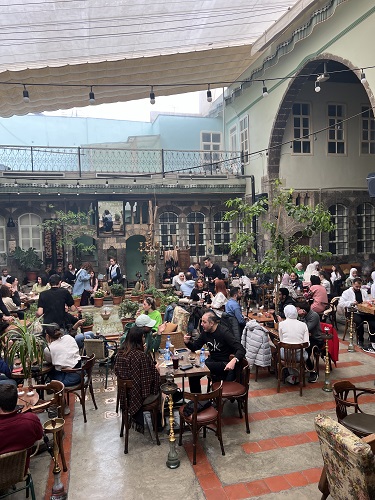
Why Should I Visit Damascene Houses?
Damascus houses offer a unique experience of the city’s rich history and culture.
Here are some reasons to visit these architectural gems:
Architectural Marvels: Damascene houses are a blend of Islamic, Byzantine, and Ottoman influences, resulting in intricate designs, distinctive decorations, and beautiful courtyards. Each house offers a distinct architectural experience.
Historical Significance: These houses offer a glimpse into the lives of people who have inhabited the city for centuries, revealing the city’s traditions, customs, and social structures.
Cultural Immersion: Visiting Damascene houses allows you to experience the city’s culture firsthand. You can learn about traditional architecture, decorative arts, Handicrafts, and the daily life of Damascene families.
Serene Atmosphere: The courtyards and interiors of Damascene houses create a peaceful and relaxing atmosphere, offering a sense of peace from the bustling city.
Support for Local Communities: By visiting Damascene houses, you contribute to the preservation of the city’s cultural heritage and support Syrian people involved in restoration and tourism efforts.
Unique Experiences: Whether you’re interested in architecture, history, or simply seeking a unique cultural experience, Damascene Houses offer something for everyone.
By exploring these architectural gems, you can gain a deeper appreciation for Damascus’s rich history, cultural heritage, and the enduring spirit of its people.
Want to Explore Syria? Embark on a journey to Syria.
For more information about Syria please get in touch with us today! Alternatively, check out our extensive range of group Syria tours.
| Share This Post!




| NEWSLETTER
Sign up and get the latest travel news monthly.