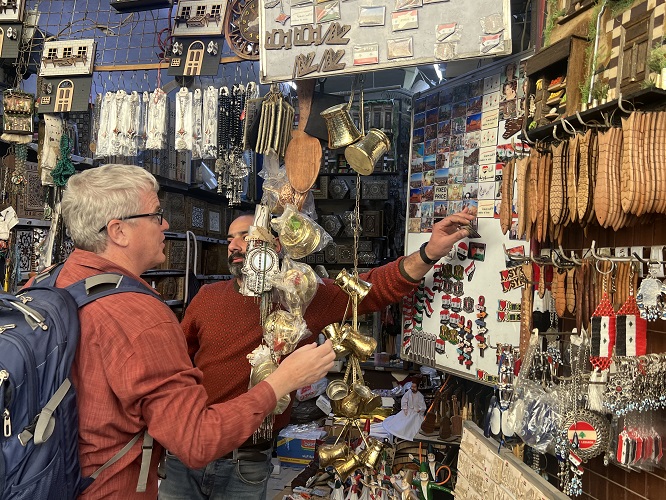
Damascus, one of the world’s oldest continuously inhabited cities, has been a home culture for millennia.
With its intricate history and rich heritage, Damascus has something for everyone.
But what makes Damascus special, is its vibrant souks and markets, in fact, these markets are a paradise for lots of big shoppers.
For those lucky enough to visit, walking through the ancient souks in Damascus is a reminder of the legacy as a crossroads of civilization.
Also, the souks are, and will always be, a testament to the city’s resilience, its culture, and its people.
Below, we will recommend some of the most famous souks in Damascus, that you don’t want to miss during your trip.
Book Your Tour to Syria Now.
Souk al-Hamidiyah: The Crown Jewel of Damascus
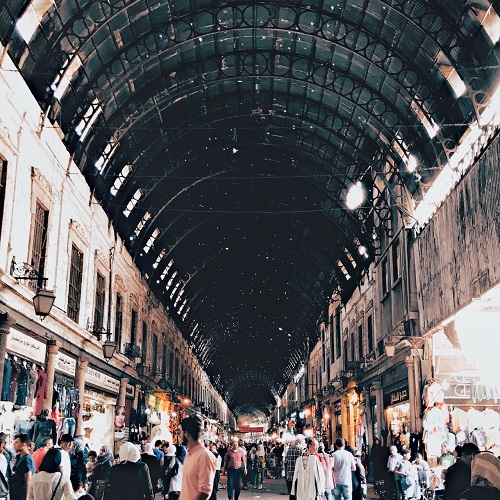
It is one of the most famous souks in Damascus, Souk al-Hamidiyah stretches from the entrance near the ancient citadel of Damascus all the way to the Umayyad Mosque.
The Ottomans built it in the late 19th century, and it stands as a remarkable example of traditional Middle Eastern architecture with its high-arched roof and long, straight aisles.
Walking through the Hamidiyah souk feels like a journey through time.
The market is lined with shops selling everything from textiles to spices, perfumes, handicrafts, and Syrian sweets.
Additionally, the souk is a haven for authentic Damascene goods for locals and tourists alike.
Traders have exchanged silk here for centuries.
In fact, a small part of the Hamidiyah souq is called Souq al Harir, which means the market of silk.
In addition to textiles, the souk is famous for its vast selection of traditional sweets. Moreover, one must-try delicacy is “Bakdash,” a famous ice cream known for its unique method of preparing mastic-based ice cream.
Specifically, the ice cream is pounded and stretched by a special tool, giving it a chewy texture that is unforgettable.
Check out this video about Bakdash, the Syrian ice cream.
Moving further into the market, visitors come across stalls filled with souvenirs, pottery, and
traditional Syrian attire.
Explore more about Handicraft in Syria.
Souk al-Bzourieh: A Fragrant Delight
Just a stone’s throw away from Souk al-Hamidiyah lies the smaller but equally famous Souk al-Bzourieh. Known for its aromatic spices and medicinal herbs.
This market offers a sensory overload that pulls visitors into a world of fragrant delights.
The smell of freshly ground spices that are considered to be the main ingredients in Syrian cuisine, like cumin, cinnamon, and cardamom fills the air, while large sacks of dried herbs are displayed openly, inviting passersby to explore their medicinal properties.
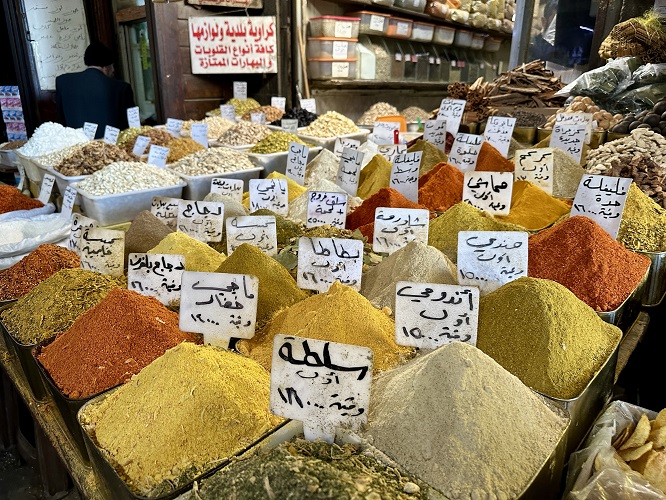
Apart from spices, Souq al-Bzourieh is famous for its dried fruits and nuts, which have been a staple
in Syrian cuisine for centuries.
Pistachios, almonds, and dates are all readily available, as are local delicacies like “Maamoul,” a type of stuffed cookie often enjoyed during religious holidays, in other words, after Ramadan in Eid al Fitr.
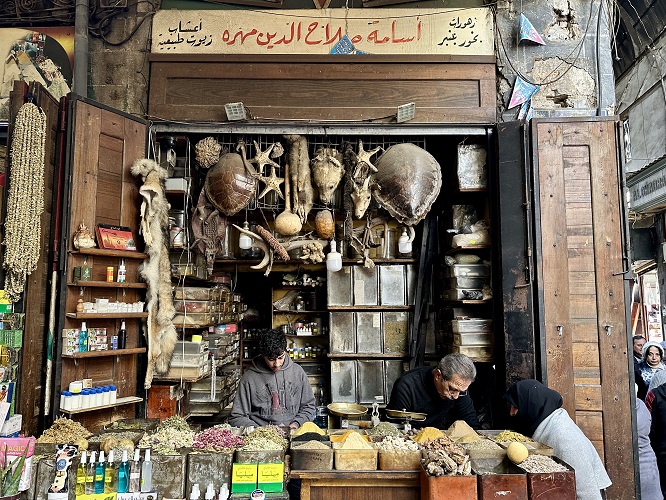
Historical significance plays a role in this souq as well. Many markets have been passed
down through generations, and some of the shops have remained unchanged for hundreds of years.
Furthermore, this sense of continuity gives Souq al-Bzourieh a timeless quality, making it not just a shopping destination but also a living museum of Damascene culture.
Midhat Pasha Souk
Named after the Ottoman statesman Midhat Pasha.
This souk is one of the oldest covered souks in Damascus.
The Midhat Pasha Souk, also known as Souk al-Tawil (the Long Souq), runs parallel to Souq al-Hamidiyah and offers a more tranquil experience compared to the bustling Souks.
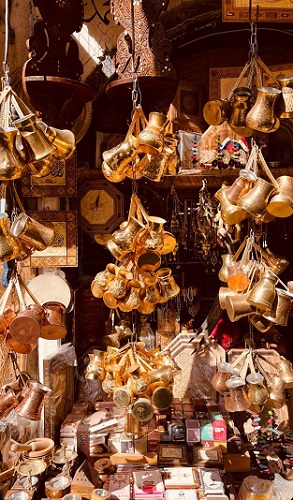
Artisans in this area are renowned for their skills in creating designs that reflect the artistic
traditions of Syria.
Afterward, visitors to Souq Midhat Pasha often leave with hand-crafted treasures, such as
mosaic tables, wooden boxes inlaid with mother-of-pearl, or copper trays engraved with arabesque.
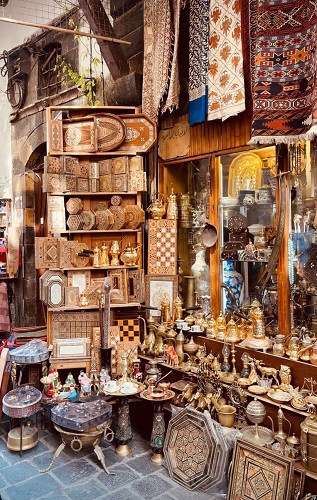
Walking through the souk offers a historical journey. The souq leads directly to Bab Sharqi, one of the ancient gates of Damascus.
Moving forward in the marketplace to the surrounding area leads the visitors to explore historic khans (caravanserais), where traders would stop to rest and trade goods. These historic khans are no longer used for their original purpose but, still stand as a testament to Damascus’s history.
Souq Saroujah: A Hidden Gem
Unlike the other souks, Souk Saroujah is often called the forgotten souq.
Located outside the Old City walls, it was once a bustling center of commerce during the Mamluk and Ottoman periods.
Souq Saroujah remains a charming area to visit for those who wish to experience a quieter, less commercialized part of Damascus.
The area is home to many old Damascene houses, some of which have been converted into hotels.
However, visitors can still find shops selling antiques, old manuscripts, and vintage furniture.
Al-Qeimariyyeh Souq
located in the heart of Old Damascus, it is a historic market known for its vibrant atmosphere and artisanal shops. Lined with narrow cobblestone streets.
The souq is a hub for artisans specializing in handmade goods such as jewelry, and textiles. Visitors to Al-Qeimariyyeh are often drawn to its charming cafes and antique shops, where one can experience the unique fusion of ancient Syrian craftsmanship.
Also, the souk serves as a cultural gathering place for the visitors and the Syrian people.
Al-Shaalan Souq
Located in the modern part of Damascus, it offers a blend of traditional and modern shopping experiences.
Unlike the historic markets in the Old City, Al-Shaalan Souk is considered a more fresh market, with a variety of stores selling fashionable clothing, alongside fresh groceries.
Its wide, bustling streets are lined with boutiques, cafes, and restaurants, making it a popular spot for both locals and visitors seeking a more modern taste of Damascus.
The Lazy Souk
The “Lazy Souk” (Souk al-Tanabel) in Shaalan, Damascus, is a unique market, referring to the idea of convenience for those who prefer to have their daily needs met with minimal effort.
The term “Tanabel,” which humorously means “lazy,” reflects the market’s focus on ready-to-cook ingredients and pre-prepared meals.
such as hollowed zucchini ready-to-be-stuffed, peeled vegetables, chopped herbs, steamed vegetables, and even marinated meats, making it a go-to destination for busy individuals who want to skip the hassle of food preparation.
Despite its lighthearted name, the Lazy Souk serves a practical role, providing quality goods while embodying a more relaxed shopping experience in the heart of the Shaalan district.
The famous souks of Damascus are more than just shopping destinations; today, the souks continue to be a vibrant part of daily life. Although the city has modernized in many ways, the souks maintain a sense of authenticity that keeps the traditions of Damascus alive.
For locals, they are places to purchase everyday necessities, while for visitors, they provide an
opportunity to immerse themselves in the history and culture of Syria.
Want to Explore Syria? Embark on a journey to Syria.
For more information about Syria please get in touch with us today! Alternatively, check out our extensive range of group Syria tours.
| Share This Post!




| NEWSLETTER
Sign up and get the latest travel news monthly.